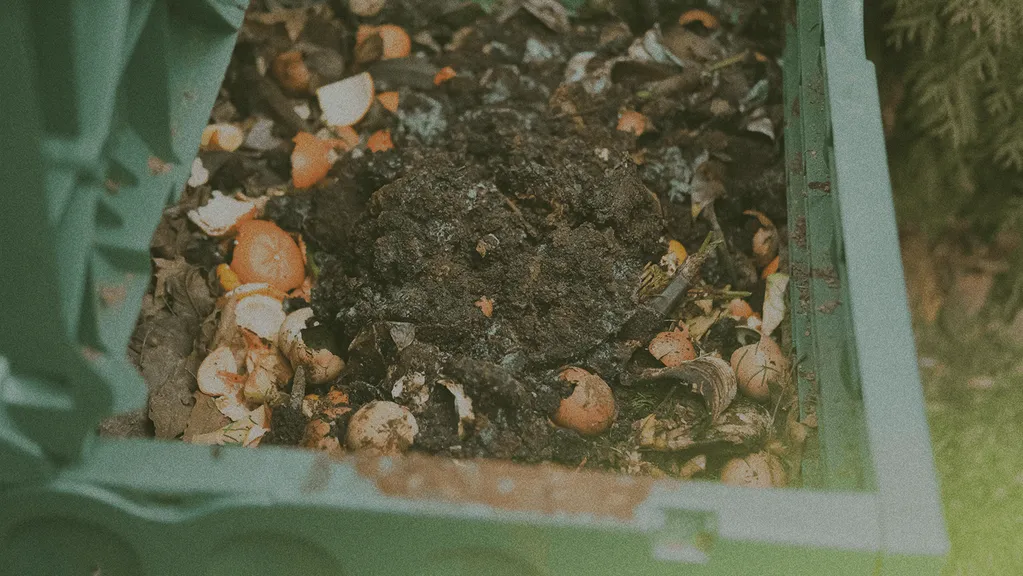
The answer isn’t to place more responsibility on businesses, consumers, and haulers. It’s to build a system that carries their efforts across the finish line.
There’s a convenient way to explain why composting programs keep falling short: Most people aren't sorting their waste correctly. Just tighten the rules, improve the signage, invest in more education, and the system will finally work. That explanation is attractive because it frames a messy, systemic failure as a matter of individual responsibility, and avoids harder questions about infrastructure, economics, and logistics.
I spent years in this industry before founding Sourgum, including running operations at my family’s recycling facility. What I learned on the floor is that contamination and low participation are symptoms, not root causes.
The Bin Is Only the Beginning
Roughly one-third of the food produced worldwide is lost or wasted, according to United Nations estimates cited by the Environmental Protection Agency (EPA). The case for composting what can’t be prevented or recovered is clear.
At the same time, businesses can do everything right inside their facilities and still fall short of their diversion goals. They can provide the bins, train employees, improve participation, and produce a clean stream of organic material. If there’s no nearby facility equipped to accept and process that material, or if transporting it makes the program prohibitively expensive, the material may still end up in a landfill.
That’s the part of the composting conversation we tend to overlook. The bin is only the first handoff in a physical supply chain that also depends on collection routes, transportation, processing capacity, facility requirements, and viable economics. Education can improve what goes into the bin, but it can’t create the infrastructure needed after the material leaves the property.
Education can improve what goes into the bin, but it can’t create the infrastructure needed after the material leaves the property.
For business leaders, that distinction has real consequences. A composting commitment may require new bins, employee training, vendor contracts, and ongoing reporting. If the downstream system can’t support the program, the organization can end up spending more without producing the environmental result it promised, and leadership is left explaining why the target was missed.
Facility Access Is a Critical Constraint
For commercial composting programs that rely on off-site processing, viability often comes down to one question: Is there a facility that can accept the material close enough for the economics to work?
If the nearest facility that can process a material is in another state, a hauler may not be able to drive it there. The customer may be willing to cover the additional mileage, but that’s only part of the cost. In the time it takes to make that trip, the hauler could have completed several local stops. To make the longer haul worthwhile, the price has to cover both the trip and the work the hauler gives up. At that point, it’s often more than the customer is able to pay.
When that happens, the material often ends up in a landfill. Not because someone sorted it incorrectly or failed to care, but because the system made recovery impractical.
Then there’s the question of what facilities are actually equipped to process. A container labeled “compostable” may only break down under certain conditions—usually at an industrial facility that can maintain high temperatures and turn the material regularly. The reality is that many communities rely on smaller operations that turn materials by hand and may not reach the temperatures required to break down that packaging.
Even when a facility can process the material, producing usable compost requires careful management. Operators need the right balance of nitrogen-rich “greens” and carbon-rich “browns,” along with enough heat, moisture, and airflow. Without those conditions, a compostable product may never fully break down, and the resulting compost may be unusable.
State-by-State Policy Complicates Diversion
Organics diversion becomes even more difficult for companies operating across multiple states because there’s no standardized, national approach. The same material may be subject to different requirements depending on where it's generated, how much a location produces, and whether a processing facility exists nearby. That requires businesses to make different decisions in every market, creating dozens of separate compliance puzzles that demand research and ongoing oversight.
The same composting program may be required and viable in one location, exempt in another, and difficult to execute in a third.
New Jersey and California illustrate that complexity. New Jersey’s Food Waste Recycling Law applies to larger commercial generators only when they meet a minimum volume threshold and are located within a set distance of an authorized facility with available capacity. The mandate is structured around what the existing system can realistically support. Where processing infrastructure is unavailable or too far away, the diversion requirement may not apply.
California takes a broader approach. Under Senate Bill 1383, organics separation requirements extend across residents, businesses, and multifamily properties statewide. Rather than limiting the mandate to areas already supported by processing capacity, the law establishes a statewide requirement and directs local jurisdictions to build the collection, monitoring, and processing systems needed to meet it.
For national businesses and waste operators, navigating this patchwork means accounting for both the regulations in each market and the infrastructure available to support them. The same composting program may be required and viable in one location, exempt in another, and difficult to execute in a third. A law can require separation and encourage investment, but it can’t instantly create a nearby facility or an economically viable route.
The Behavior Problem Is Real, But It’s Only a Symptom
Consumer behavior still matters, but it's worth being precise about why it matters, because the usual framing gets it wrong.
Contamination is genuinely destructive. At the recycling facility, we could process nearly every material stream it was designed for, and still the contamination was staggering. People put whole raw chickens through the system, garden hoses, and other things our recycling facility isn’t built to handle. It usually wasn't a lack of education, but carelessness. “A bin is a bin.” Ask people to add a third bin for organics, and many can’t tell you where it would even go. Plenty don't reliably use the two bins they already have.
In a commercial building, that challenge compounds. Waste from multiple tenants is often collected together, so one tenant can sort perfectly and still have the entire load contaminated by mistakes elsewhere in the building. That results in added fees or material the processing facility can’t accept. The effects continue downstream. Facilities then have to spend more time and money removing plastics and other contaminants, which slows processing, raises operating costs, and can reduce the quality of the finished compost. The EPA identifies contamination, particularly from plastics, as a significant challenge for organics recycling.
Worse, a contaminated stream can burn more energy than doing nothing. Material gets baled, wrapped, sorted, and trucked through an energy-intensive process only to end up in the landfill it was meant to avoid.
'Try harder to sort correctly' will never be the answer.
People contaminate because the system asks something inconvenient of them and provides no structure to make it easy. The behavior is the visible symptom, and the absent system is the cause, which is why "try harder to sort correctly" will never be the answer.
Two Blind Spots Undermining the System
Two deeper problems rarely make it into a sustainability report, and both should concern anyone putting their name on one.
The first flaw is design. I’ve seen projects optimize the processing line while overlooking the logistics required to feed it, including a plant engineered to process 1,000 tons a day undermined by a single scale house that could only move half that volume through the gate. It doesn't matter how sophisticated your processing line is if you can't physically get the material in the door. That's over-investment in the equipment and under-investment in the logistics that feed it.
The second flaw is data. This is an industry that has largely run on unverified numbers for decades. A load arrives, and someone visually estimates its composition on a ticket, often with no way to validate it. I’ve seen a load recorded as 30% wood when it contained no wood at all. Sometimes there’s pressure to hit a diversion target, and sometimes it’s a lack of tools to make an accurate assessment.
Either way, if the data feeding your environmental, social, and governance (ESG) disclosures was estimated by whoever happened to be holding the clipboard, you’re exposed in ways you probably haven't priced. You can’t build reliable infrastructure, or honest reporting, on top of guesswork.
Four Questions to Ask Before Setting a Target
Taken together, these challenges point to four questions business leaders should ask before approving a composting program or committing to a public diversion target:
Is there a facility with the capacity to accept and process this exact material?
Can the material reach that facility at a viable cost?
Can the stream remain clean across every location and tenant?
Can the final destination and diversion result be verified?
If leaders can’t answer all four with confidence, the program may look like progress without delivering the intended result. Solving these challenges at one location is difficult enough. Doing it across an entire portfolio requires coordination across the system.
From Fragmented Efforts to a Coordinated System
If working inside this industry has taught me anything, it’s that sustainability and profitability have to reinforce each other, or sustainability won’t endure. When sustainability is its own cost center, it becomes vulnerable the moment budgets tighten or leadership changes direction.
If working inside this industry has taught me anything, it’s that sustainability and profitability have to reinforce each other.
The more durable model makes the sustainable outcome economically practical. In waste and recycling, that requires more than asking each consumer, hauler, or processing facility to do their part independently. The system needs enough coordinated demand and volume to make diversion worthwhile for everyone involved.
An individual business can sort its material correctly, but it can’t create local processing capacity or make an inefficient hauling route viable on its own. When volume from multiple locations is coordinated across a broader network, the economics can change. Routes that may not work for one customer can become worthwhile at scale, giving businesses a more practical way to direct material toward a better destination.
Scale, in this context, is about creating enough coordinated volume to influence where material goes, and supporting that volume with sound logistics, reliable data, and visibility. Those aren’t the most exciting parts of sustainability, but they are what allow a program to move beyond a local pilot and produce far-reaching results.
Good intentions can launch a composting program, but they can’t determine where the material ultimately goes. The system beyond the bin determines whether the promise is kept.
Sources
