
Higher costs, lower consumer spending, and ongoing economic uncertainty continue to present challenges for restaurants and foodservice businesses. Commodity prices have fluctuated dramatically: coffee increased 29%, eggs increased 25%, and butter decreased 18% in 2025.1 This volatility forces operators to stay even more adaptable and strategic.
Foodservice operators have the added pressure of maintaining profitability without raising prices so much that they drive customers away. To manage that fine balance, many have adopted new technologies that streamline day-to-day operations. Modernizing logistics, such as waste and recycling, can uncover hidden efficiencies and free staff to focus on delivering an exceptional customer experience.

Streamlining Complex Day-to-Day Operations
As restaurants and foodservice businesses expand into multiple service channels, including dine-in, delivery, takeout, and catering, operations become even more complex. To keep pace, operators turn to connected, sustainable, and customer-centric models that help them anticipate demand and stay adaptable.2 Advanced point-of-service systems, online ordering platforms, and inventory management software are now an integral part of profitable operations.
One opportunity that often goes overlooked is waste and recycling. Unreliable collection services can quickly disrupt daily foodservice operations, leading to overflowing bins, missed pickups, and unsanitary conditions that increase the risk of health code violations and brand reputation. Already-strained managers and staff end up spending valuable time troubleshooting instead of focusing on customer service.
Unreliable waste services disrupt daily foodservice operations, leading to overflowing bins, missed pickups, and unsanitary conditions.
Technology-driven waste and recycling platforms eliminate these risks by improving reliability and visibility. Real-time tracking, automated scheduling, and route optimization ensure timely service, while centralized dashboards simplify vendor management across multiple locations. The result: fewer operational disruptions, cleaner facilities, and stronger compliance. In fact, 86% of recurring Sourgum customers report saving at least 50% of time spent managing waste and recycling operations.3
 Reducing Costs and Improving Predictability
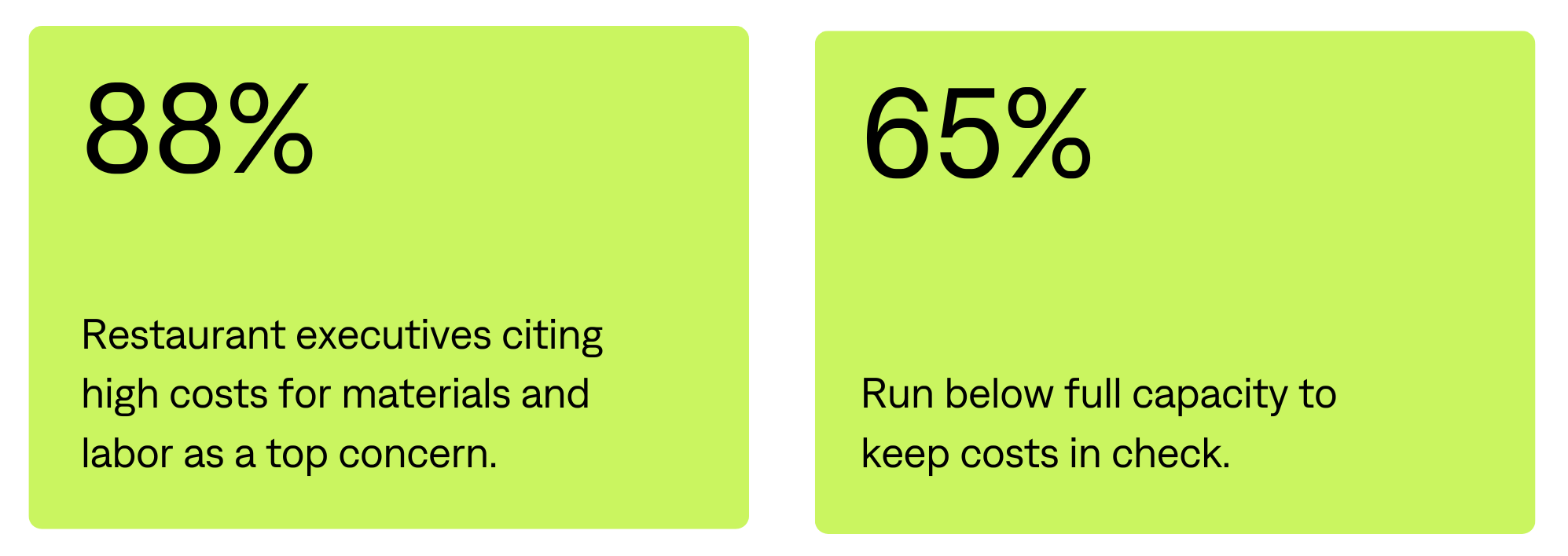
Rising input costs remain one of the biggest challenges for foodservice businesses: 88% of restaurant executives cite high costs for materials and labor as a top concern, even as inflation slows.4 As leaders rethink how they run their businesses, the majority report running below full capacity to keep costs in check, whether that involves staying closed during slow hours, streamlining menus, or shutting down underperforming locations.1
As operators take concrete steps to adapt their business models, modern waste and recycling solutions offer a path forward. Technology-driven platforms help restaurants and multilocation retailers run more efficiently by identifying inefficiencies, optimizing container usage, and preventing unnecessary pickups. By reducing overages, fines, and other avoidable costs, these systems make expenses more predictable and give operators greater control over their budgets.
Turning Waste and Recycling Into a Competitive Advantage
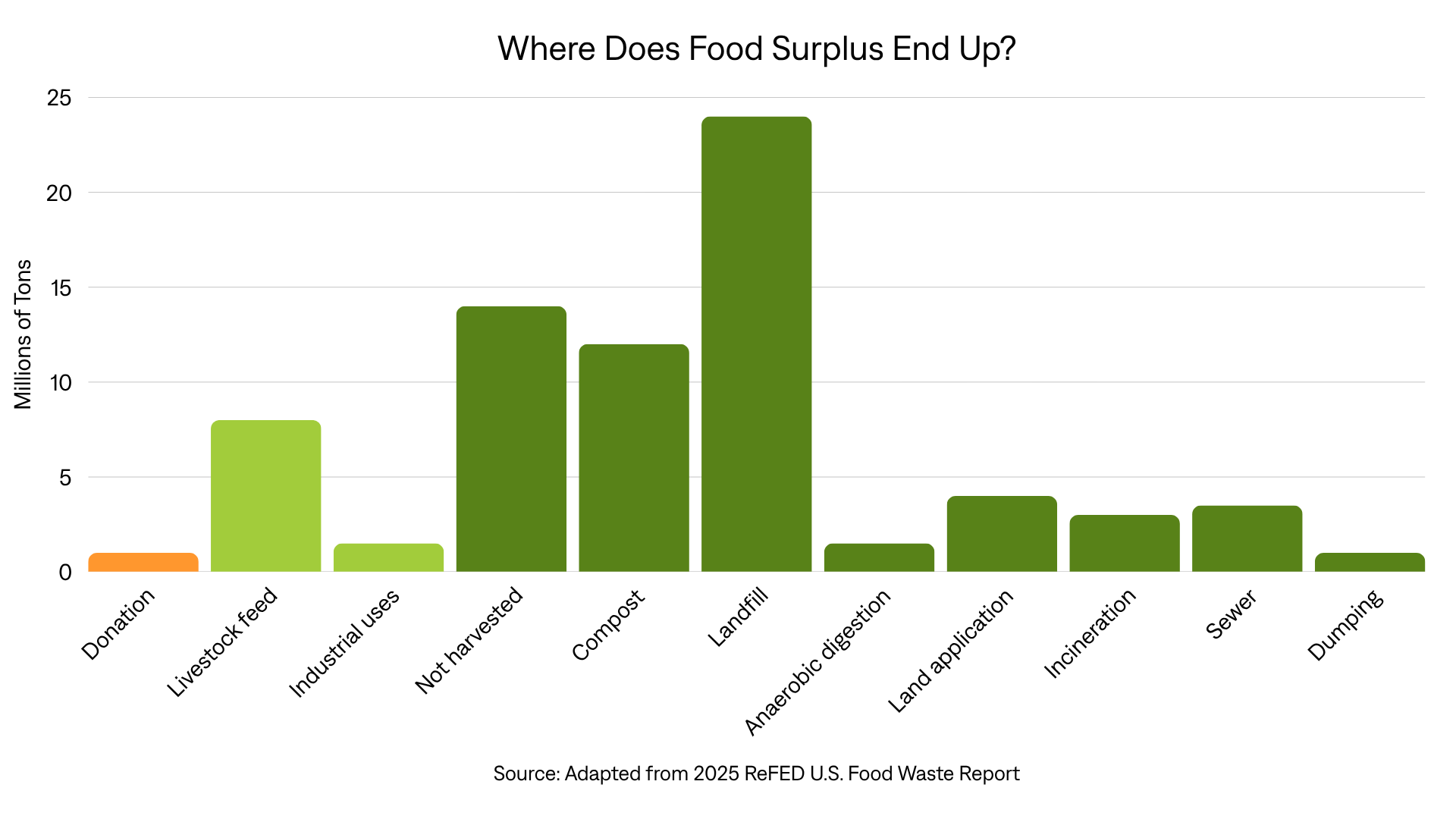
In the United States, approximately 85% of surplus food ends up in waste destinations, with landfills representing the largest single destination (see chart).5 This represents not only an environmental challenge, but a significant operational and financial inefficiency. Food retailers and restaurants lose billions annually through overproduction, spoilage, and disposal costs, while also facing increasing scrutiny and reputational risk tied to sustainability. Waste, in this context, is a direct reflection of process maturity and operational discipline.
Restaurants lose billions annually through overproduction, spoilage, and disposal costs.
Additionally, when recycling programs are readily available, diverting materials such as cardboard from landfills to recycling centers is not only more sustainable, but often more cost-effective. In many markets, recycling services carry lower disposal costs due to favorable recycling commodity markets, allowing operators to reduce overall waste expenses while improving diversion performance.
The opportunity is clear: with the right strategy, waste reduction delivers measurable financial, operational, and reputational returns.
How Waste Technology Drives Profitability
For food retailers and restaurants, even incremental reductions in surplus can lower disposal volumes and improve cost control. Capturing that opportunity depends on operational visibility and consistent execution across locations.
Modern waste and recycling platforms help create that discipline by enabling real-time service tracking, predictable pricing, centralized reporting, and clearer accountability across vendors. With greater visibility, teams can minimize disruptions and make more informed decisions about their waste generation and diversion.
That’s the operational control Sourgum is built to deliver. Teams have reported:
Diverting nearly 1 million pounds of cardboard from landfill at a single site
Achieving landfill diversion rates of up to 83% across locations
Reducing waste-related costs by up to 50%
To understand what similar improvements could look like for your business, request a free waste audit.
Takeaways
Technology-driven waste and recycling is no longer just a service model, it is a strategic business capability. With modern, integrated tools, organizations can reduce manual efforts, improve accountability, and make measurable progress toward sustainability goals. In doing so, waste and recycling shifts from an overlooked cost center to a source of operational efficiency, environmental leadership, and competitive advantage.
Sources